What Does It Mean to Be a Tenant of This Planet?
We live on a planet we did not create, depend on resources we cannot replace indefinitely, and share a world that will continue long after we are gone. What responsibilities come with this temporary presence?
We Arrived in a World That Already Existed
Nobody chooses to be born. We do not choose the planet we enter, the family into which we are born, or the circumstances that shape our early lives. When we arrive, the world is already here. Mountains have formed, rivers have flowed, forests have grown, and generations of people have built societies, developed languages, created art, and accumulated knowledge.
As we grow older, we begin to understand the world through the idea of ownership. We speak of our homes, our land, our businesses, and our possessions. Ownership is an important part of human society because it provides security, establishes rights, and helps us organise our lives. However, there is a fundamental difference between owning a piece of property and owning the planet on which that property exists.
We did not create the Earth or the natural systems that make life possible. We inherited a world shaped by processes that began long before humanity existed. Although we can acquire property and use natural resources, our legal rights do not mean that we have unlimited control over the conditions that sustain life.
This leads to an interesting question: What if we understood ourselves not simply as owners of things, but as tenants of this planet?
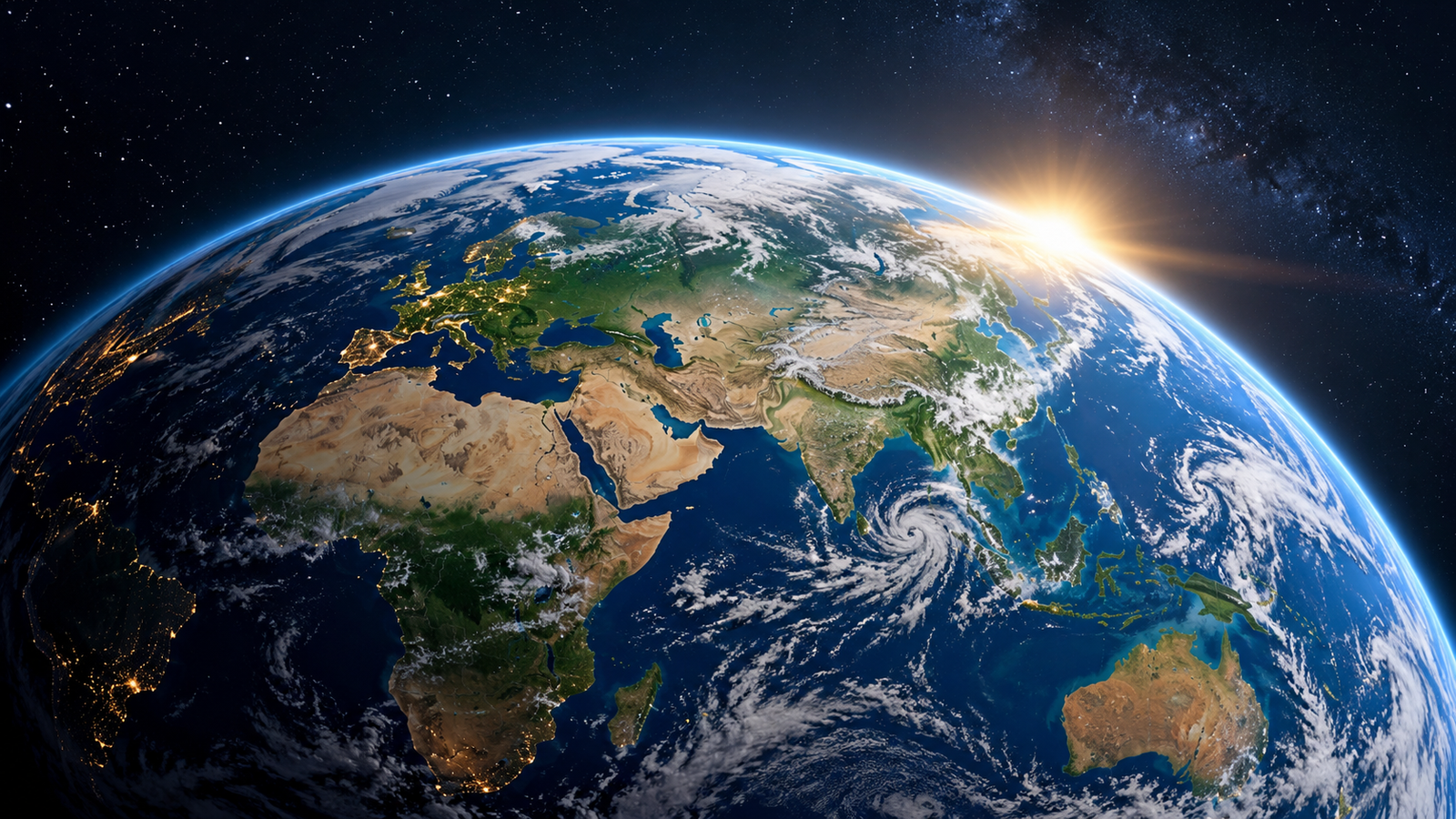
The idea of planetary tenancy is a way of thinking about our temporary presence on Earth. It reminds us that we depend on a world we did not create, share it with other forms of life, and influence the conditions that future generations will inherit.
Living Within the Limits of Our Planet
A responsible tenant understands that the place they occupy must be cared for if it is to remain useful. Our relationship with Earth is more complicated because the planet is not merely a place where we live; it is the foundation of our existence. The air we breathe, the water we drink, the food we grow, and the materials we use all depend on natural systems.
Human beings have developed extraordinary abilities to transform their surroundings. We build cities, cultivate land, extract minerals, develop technologies, and manufacture products that improve many aspects of life. These achievements demonstrate our creativity, but they also give us the power to damage the systems on which we depend.
We cannot consume finite resources indefinitely without consequences. We cannot destroy ecosystems, pollute water sources, or ignore environmental damage and expect these actions to have no effect on human life. The planet does not adjust its natural processes simply because our needs and ambitions continue to grow.
Being a tenant of this planet does not mean that we should stop developing, building, or using resources. Human life requires all these activities. Instead, it asks us to consider how we use what is available and whether our decisions preserve the conditions necessary for life to continue.
There is a difference between using a resource and exhausting it, between developing land and destroying its ability to support life, and between creating wealth and transferring the costs of that wealth to other people. Recognising these differences is an important step towards living more responsibly.
The World We Inherit
Our inheritance extends far beyond money and property. We inherit languages that help us communicate, scientific discoveries that expand our understanding, artistic traditions that express human experience, and technologies developed through the work of countless people. We also inherit roads, schools, hospitals, libraries, and institutions that support modern society.
Much of what makes our lives possible is the result of contributions made by people we will never meet. A designer working on a computer, for example, depends on centuries of developments in mathematics, typography, colour theory, engineering, and computer science. A teacher builds on the knowledge of earlier educators, while a scientist uses discoveries made by previous generations.
Individual achievements remain valuable, but they rarely emerge from nothing. We receive knowledge, tools, and opportunities from others, then use them to create something new. In this sense, every generation is both an inheritor and a contributor.
However, we do not inherit only achievements. We also inherit unresolved conflicts, social inequalities, damaged environments, and the consequences of decisions made before we were born. Some parts of our inheritance deserve protection, while others require correction and improvement.
Recognising this responsibility does not mean rejecting the past or preserving everything exactly as it is. It means understanding what we have received, learning from its successes and failures, and deciding what should be carried forward.
We are not merely inheritors of the world; we are participants in its continuing story.
Our Time on Earth Is Temporary
Every human life has limits. We can make plans, build careers, establish businesses, create art, and accumulate knowledge, but we cannot remain on this planet indefinitely. Eventually, we leave behind the things we have created and the consequences of our decisions.
The houses we build may continue to shelter people, the businesses we establish may create opportunities for others, and the knowledge we share may help someone solve a problem many years later. Equally, our actions can leave behind damaged relationships, polluted environments, or problems that future generations must struggle to resolve.
Our lives are temporary, but our influence does not always end with us. A teacher may inspire students who go on to teach others. A scientist may contribute to discoveries that improve human life. A farmer may improve the soil for future crops, while a community may protect a forest that benefits generations to come.
This does not mean that everyone must achieve something extraordinary or devote their entire lives to a public cause. Personal happiness, family relationships, creativity, rest, and ordinary experiences are also important parts of being human. We do not have to justify our existence through constant productivity.
Nevertheless, we can recognise that our actions have consequences and that some of those consequences are within our control. We may not determine everything that happens after our lifetime, but we can influence the condition in which we leave things behind.
What Do We Owe Future Generations?
Future generations cannot participate in today’s decisions, yet they will live with many of the consequences. They will inherit the natural environment, the technologies we develop, the institutions we establish, and the knowledge we preserve or neglect.
We cannot predict precisely what their lives will be like. Scientific discoveries, social changes, and new technologies will create opportunities and challenges that we cannot fully imagine today. However, we already understand the importance of clean water, healthy ecosystems, education, reliable institutions, and access to knowledge.
Our responsibility is not to dictate how future generations should live. They must have the freedom to question our beliefs, improve our institutions, and develop solutions that we cannot foresee. Our responsibility is to avoid unnecessarily limiting their opportunities.
This means considering the long-term consequences of our decisions rather than focusing exclusively on immediate benefits. It means investing in education, protecting essential natural resources, supporting responsible innovation, and addressing problems that might otherwise become more difficult for future generations.
The same principle applies beyond the environment. When we preserve knowledge, encourage critical thinking, and create fairer opportunities, we help future generations respond to challenges more effectively. When we neglect these responsibilities, we may pass avoidable problems to people who had no part in creating them.
A responsible approach to planetary tenancy therefore asks a simple question: Are our decisions expanding or restricting the possibilities available to those who come after us?
A Shared Planet, Unequal Responsibilities
Although every human being depends on Earth, people do not experience the planet in the same way. Some enjoy abundant resources, education, security, and economic opportunities, while others struggle to obtain clean water, adequate food, or a safe place to live. Some people have considerable influence over decisions that affect the environment and society, while others have little control over those decisions.
A philosophy of shared planetary responsibility must recognise these differences. It would be unfair to expect everyone to carry the same burden regardless of their circumstances, resources, or influence. A family struggling to meet its basic needs does not have the same choices as a company that controls substantial resources. A community affected by industrial pollution may have little power to influence the decisions that caused it.
Those who have greater power to prevent harm often have greater responsibility to use that power carefully. Businesses, governments, institutions, and individuals with significant influence should consider the wider consequences of their actions. People who benefit from a system should also be willing to examine the costs that others may bear.
Planetary tenancy is not a claim that everyone is equally responsible for every problem. It is a reminder that our shared dependence on Earth must be considered alongside differences in power, opportunity, and vulnerability.
We may inhabit the same planet without experiencing the same reality. A responsible philosophy must acknowledge both our common interests and our unequal circumstances.
Knowledge and Responsibility
Living responsibly in a complex world requires more than good intentions. We need knowledge about the natural systems that sustain us, the history that shaped our societies, the technologies transforming our lives, and the institutions that influence our choices.
We must learn to distinguish evidence from assumption, evaluate competing claims, and recognise the limits of our own understanding. Scientific knowledge develops, social institutions change, and new technologies create possibilities that earlier generations could not have imagined. Remaining curious and willing to revise our beliefs is therefore essential.
Education is not simply a means of obtaining qualifications or improving employment prospects. It also helps people understand the world, make informed decisions, recognise misinformation, and participate more effectively in society.
However, knowledge alone does not guarantee wisdom. A person may understand the consequences of an action and still choose to ignore them. Wisdom requires us to connect what we know with what we value and how we behave.
As our knowledge and abilities grow, so does our capacity to influence the world. We should therefore consider not only what we can accomplish, but also how our actions affect other people and the environment. The purpose of learning is not merely to accumulate information; it is to improve our ability to understand, decide, and act responsibly.
What Does a Responsible Tenant Do?
The idea of planetary tenancy becomes meaningful when it influences everyday decisions. We can begin by asking whether our consumption creates unnecessary waste, whether our work provides genuine value, and whether the technologies we use solve meaningful problems without causing avoidable harm.
We can consider how our decisions affect the people around us, whether we are willing to question unfair practices, and how we contribute to the preservation and sharing of knowledge. We can also examine what our activities mean for the natural environment and the opportunities available to future generations.
These questions do not require us to become perfect. No individual can solve every environmental, social, or economic problem. Some challenges require collective action, effective public policies, responsible institutions, and cooperation across communities and countries.
However, recognising the scale of a problem should not become an excuse for doing nothing. We can make informed choices, improve our work, share useful knowledge, support responsible practices, and contribute to solutions within our reach. We can also work with others when individual efforts are not enough.
Being a responsible tenant does not mean avoiding every mistake or living without ambition. It means understanding that our freedom to act comes with a need to consider the consequences.
A Different Way to Understand Our Place in the World
The idea of planetary tenancy invites us to reconsider how we understand success, progress, education, technology, and responsibility. Perhaps success should be measured not only by what we accumulate, but also by what we contribute. Perhaps progress should be judged not only by what we build, but also by what we preserve and improve.
Education should help us develop understanding and judgment, not simply collect qualifications. Innovation should be examined not only for what it makes possible, but also for the consequences it creates. Freedom should include the ability to pursue our goals while respecting the legitimate interests and dignity of others.
These ideas do not provide complete solutions to humanity’s problems. They cannot replace scientific evidence, sound public policy, or careful decision-making. Instead, they offer a perspective from which we can examine our relationship with the world and ask questions that the language of ownership alone may not fully address.
We are neither all-powerful masters of the planet nor helpless spectators in its future. We are participants in a world that we inherit, use, change, and eventually leave behind. Our knowledge is incomplete, our time is limited, and our decisions can have consequences beyond our immediate lives.
TENANT begins with this understanding. It is an invitation to explore what it means to live responsibly in a world shared with other people, other forms of life, and future generations. It encourages us to question assumptions, examine evidence, share knowledge, and think carefully about the consequences of our choices.
The aim is not to tell everyone what to think, but to create space for better questions and more thoughtful decisions.
We did not choose to enter this world, and we did not create everything that sustains us. But while we are here, we can learn to understand the world more deeply, recognise our dependence on others, and take responsibility for the things we can influence.
We inherited a world we did not create. We are using it temporarily. What will we leave behind?
TENANT is an open public-knowledge platform exploring what it means to live responsibly on Earth. Through questions, knowledge, and thoughtful inquiry, it seeks to encourage a deeper understanding of our relationship with the world we share.